Thursday, May 14, 2015

Women's Wellness on the Water

Clinical Health & Wellness is helping host a paddling event in Long Island on May 30. The event is called "Women's Wellness on the Water" and will be instructed by Bonnie Owens, LCSW. Bonnie counsels veterans in her private practice and directs a trauma and recovery program for military service members at the Seafield Center, an addiction treatment facility in Westhampton Beach, Long Island.

Bonnie, the Director of Seafield's "Honor and Resiliency" Trauma and Recovery Program: Dedicated to Uniformed Service Members, started kayaking about 15 years ago. She takes groups out on the water to talk them through relaxation techniques. I asked her to share how she first got involved with Hope For The Warriors® through kayaking, as well as the positive effects of kayaking on trauma and resiliency.


How did you first get involved with Hope For The Warriors®?

As a consultant for the FDNY CSU, after the 9/11 attacks, I partnered with peer counselors to educate members on PTSD and provide firehouse outreach. This opportunity was life changing and I am blessed to say I have gained dear friends during these times. One of the Peers, Ralph Esposito had met Tina Atherall and he knew we needed to meet. He arranged a luncheon where Tina, Ralph, and I talked and talked about our experiences, our passion and commitment to ensure service members receive the care and respect we believe in our hearts and souls they so deserve. From that point forward I became a fan and supporter of Hope For The Warriors®. Tina said I was an integral part of helping Hope For The Warriors® hit the ground running in NYC with our clinical, trauma education programming. For me, I was simply helping an organization I believed in.


Why is it important for you to support veterans/service members, specifically female veterans/service members? 

I am a daughter of Korean War Navy man, Two of my uncles served as well, one as a Marine, and the other in the Army. I also have a cousin who served in the Navy. I am driven to do my part, to ensure the well being of all who serve. Female military members represent to me a strength and warrior spirit I could only hope to aspire to. Simply put, they make me want to be a better person, do better, protect better, and support better.


Tell me more about your background working with Trauma & Resiliency. 

9/11 changed the landscape of my life, both personally and professionally. In the immediate aftermath I was given the privilege of helping first responders, and other rescue and recovery workers and their families (both through FDNY and a NYPD organization known as POPPA, Police Organization Providing Peer Assistance).

Despite my professional training and knowledge, (LCSW, CASAC, C-CATODSW, ICADC, and EMDR part 2) nothing had quite prepared me sufficiently as I counseled the weary and traumatized. I found myself scrambling to secure and employ the most state of the art trauma response counseling strategies, interventions, and techniques. It was my experience that the conventional trauma response strategies, although beneficial, were not enough. Something more was needed. In an effort to help clients find relief and understanding, I drew from my respective fields of study and professional work. I was drawn to healing the physical and psychological symptoms of trauma. 

I engaged in a self-disciplined study of all the resources I could find, because during those early days there wasn't a formal place of study for trauma. Over the years I have become a presenter on many topics surrounding neuroscience, exercise, peer connection, critical stress and many more as they relate to trauma.
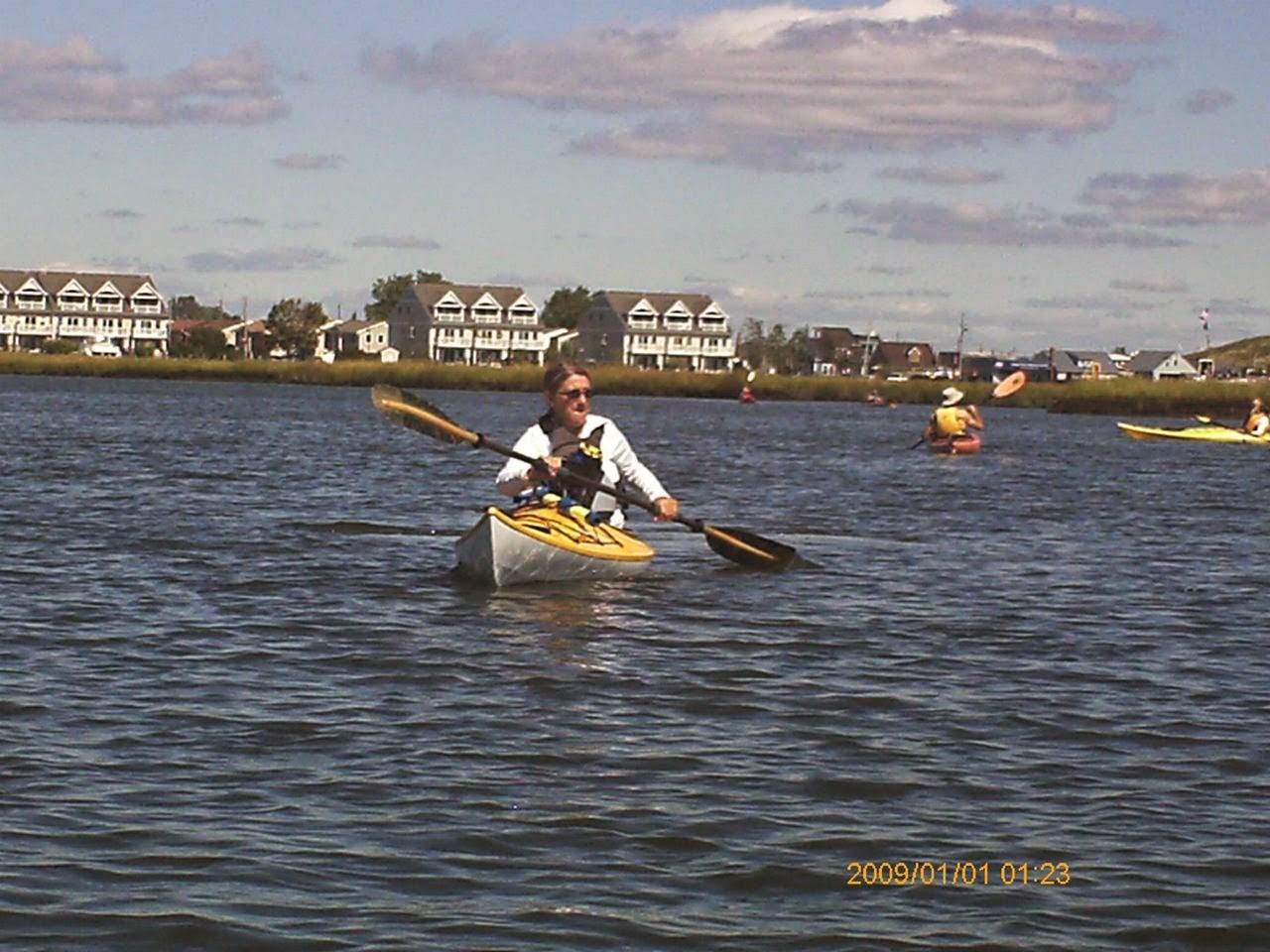

What effects and benefits have you seen working with wellness and water activities, specifically when working with veterans? How do they change from the beginning of an activity to the end?

The “Wellness on The Water” events have given military members and their families an opportunity to diffuse the isolation and disconnect.  At the beginning of the events, socializing is limited; members are often quietly and respectfully standing around, waiting to go out on the boats. During the paddling event you can watch the transformation: smiles, conversations, and laughter. Individual paddlers begin to paddle alongside another and conversations begin. Many times participants begin to comment on how relaxing the actual paddling is. I might then take the opportunity to paddle alongside them and begin to talk about the importance of moving through the trauma. Or I might talk about how to develop their own guided imagery by capturing the calming forces of the paddling, emphasizing they can then use the imagery anytime, anywhere. 

After the paddling, during the meal, participants are more relaxed, verbal and engaging, so that transformation brings me so much satisfaction. It's also nice to hear that they want to come back on the water to continue the process.

Tuesday, May 12, 2015

A Day in the Life of a MSW Intern

May is in full swing here at Hope For The Warriors®, which means the academic year is ending for most of our interns. Graduation is on the horizon for many, so I sat down with one intern in our New York office pursuing her Masters in Social Work (MSW) to ask about the typical "day in the life" of a Social Work intern. This typical day for Jenn showcases the great program work and applied experience we offer our interns.

Here's what Jenn had to say about her intern work with Hope For The Warriors®.

A typical day as a MSW intern ranged in a variety of different tasks. As a track B student at Fordham University I was required to do both clinical and administrative work.

As an intern my primary clinical task included intake assessment calls. First I would call the service member assigned to me and complete a full biopsychosocial assessment. This including gathering information about their medical history, combat injury, financial status, family system, psychological functioning, and social support systems. During this intake interview I would also ask the service member what they were seeking from Hope For The Warriors®. Some clients were seeking financial assistance and others were interested in the other programs. Once I completed the intake interview, I would have to assess if the client met the necessary criteria for financial assistance. I would reach out to the service member for necessary documents and VA paperwork to complete their intake application. Sometimes I would create a document of resources available for the service member, depending on their needs. After assisting the service member, I would end the assignment and follow up 30, 60, and 90 days after completion. This was a very challenging aspect of my internship, but it provided so much insight into the challenges and needs of today's service members and military families. 

Although this was somewhat tailored to my internship experience, I enjoyed assigned writing projects. I worked on program proposal writing with the guidance of several staff members, including the Clinical Health & Wellness Senior Director. I developed a program proposal for The Arts & Health program. I was able to use resources from my Fordham classes to help me develop this program. Another project I enjoyed working on as a student was writing blogs on Art Therapy, Reiki, Yoga, and Meditation and their impact on Post-Traumatic Stress Disorder (PTSD). I was excited to write these blogs because I am an advocate for holistic complimentary medicine. Being able to engage my passions within the work I was doing for Hope For The Warriors® makes their internship program truly unique.


Another project that I worked on during my internship was helping the Outdoor Adventures Program. I worked with a staff member to follow up with a list of service members about their interest in the program. This was a project I worked on for several months. The main purpose of the project was to reach out to service members and end assignments or reduce the number of open cases.

The remainder of my time as an intern was spent collaborating in local staff meetings, critical care staff meetings, clinical and task supervisions, and working local events. 

I believe this internship has prepared me for the field of Social Work, specifically from the lens of real-world military cultural competency training. My work contributed to the quantity and quality of case management within Hope For The Warriors® and I am appreciative of the opportunity. This program puts invaluable focus on the importance of being a leader in the field of mental health, which is a priority for me and Hope For The Warriors®.

Tuesday, May 5, 2015

Mental Health Awareness Month: QPR


QPR: Ask a Question, Save a Life

If veteran suicides have increased, shouldn't the number of suicides reported through the Crisis Hotline also be on the rise? Yet that does not appear to be the case. The Crisis Hotline is an effective referral tool but only if Veterans utilize the service. The key to improving these numbers is education. Do you know the signs and do you know how to speak with someone about suicide? Do you know what the next step would be?


This spring, Hope For The Warriors staff members, interns, volunteers, and supporters took the pledge to #ChangeMentalHealth by learning the five signs. This initiative, through Give an Hour, taught us the five signs to identify someone with a mental health crisis. The signs are withdrawal, agitation, hopelessness, decline in personal care, and change in personality. 

In April, Hope For The Warriors took another step in our mental health education. During our annual Staff Development Conference, each staff member was trained in QPR: Question, Persuade, Refer. Regardless of our role within the organization, Hope For The Warriors staff needs to be trained, educated, and prepared to help with service members, veterans, and military family members who might be at risk for suicide.

What is QPR?
QPR is not intended to be a form of counseling or treatment.

It is intended to offer hope through positive action.

When you apply QPR, you plant the seeds of HOPE. HOPE helps prevent suicide.

Overview of QPR Training
During the QPR training, we learned myths and facts about suicide. We learned about the most common verbal and behavioral clues in someone that is considering suicide. Most importantly we learned what to say and do if we are speaking with someone exhibiting these signs. The training ended with role playing and small group discussion.

As a nonprofit, each one of our staff members needs to use this information to support our veteran population. 

This blog does not replace true QPR training but is the start of an education process.

Question:
Depending on your comfort level and your relationship with the person, you can ask a direct or indirect question.

Indirect question examples:
  • "Have you been unhappy lately?"
  • "Have you been so unhappy that you've thought about ending your life?"
  • "Do you ever wish you could go to sleep and never wake up?"


Direct question example:
  • "You know, when people are as upset as you seem to be, they sometimes wish they were dead. I'm wondering if you are feeling that way too?"
  • "Are you thinking of killing yourself?"


Do NOT ask: "You're not suicidal, are you?" 
That makes the person less likely to open up and talk to you. The question leads to the answer you want to hear, which might not be the truth.


Persuade: 
How do you persuade someone to stay alive?

  • Listen to the problem and give your full attention
  • Remember, suicide is not the problem, only the solution to a perceived insoluble problem
  • Don't rush to judgment
  • Offer HOPE in any form

Your willingness to listen and to help can give HOPE

Refer: 
  • The best referral involves taking the person directly to someone that can help.
  • If that is not possible, get a commitment from them to accept help, and make arrangements.
  • If that is not possible, give referral information and get a good faith commitment not to attempt suicide.
Referrals:


Veterans Crisis Line: 800.273.8255 Press 1

The Veterans Crisis Line is available 24/7.


Training was provided by Vicki Lane, a Licensed Clinical Social Worker and a Regional Clinical Social Worker with Hope For The Warriors. Vicki earned her certification in QPR through the Suicide Prevention Resource Center (SPRC). SPRC is supported by a grant from the Substance Abuse and Mental Health Services Administration (SAMHSA).


Tuesday, April 28, 2015

Legacy of Hero Remembered by Team Hope For The Warriors® Member

After many months of training and fundraising, Team Hope For The Warriors® member, Nick Iacono, raised around $5,000 in honor of Staff Sergeant Michael Ollis in the 2015 United Airlines NYC Half Marathon. Nick alone was able to fundraise five times the required amount and went above and beyond to help Hope For The Warriors® in their mission of restoring self, family, and hope for all military families.

Nick met Michael’s family through his work in the office of his hometown Staten Island congressman, a Marine combat veteran himself. In 2013, Nick had the privilege to welcome the Ollis family, including Michael’s father Bob, mother Linda, and sisters Kim and Kelly, to the congressman’s office in Washington, D.C., where he gave them a tour of the Capitol. Inspired by Michael’s story, Nick was determined to contribute to the efforts to preserve Michael's memory and heroic sacrifice.

Staff Sergeant Michael Ollis of Staten Island, NY, served with valor and honor through his time in Afghanistan. On August 28, 2013, Michael sacrificed his own life and saved a Polish service member, Karol Cierpica, from a suicide attack. A year later, the Cierpica family announced they were expecting a baby boy and planned to name their son after Michael Ollis. Michael’s parents were able to go to Poland to visit with the Cierpicas and meet with Polish dignitaries, including the president, prime minister, and military leaders. In January of 2015, Michael Cierpica was born and will carry on the legacy of Michael Ollis.

Knowing Michael’s story and being an involved member of the Staten Island community, Nick desired to continue his memory. “Michael truly embodies, to me and to so many Staten Islanders, the very definition of a hometown hero, and even more than that, an American hero,” said Nick. “I think that his astounding bravery and sacrifice for our freedom—which is also borne by his family—deserves recognition and remembrance. So, the decision to dedicate my run to him and his memory was an easy one.”

Nick became hooked on distance running after a friend encouraged him to train and run in the Staten Island Half in October 2014. The 2015 United Airlines NYC Half was his second half and he plans to do more distance races both in New York and Washington, D.C.

Nick ran a successful NYC Half on Team Hope For The Warriors®, and said, “I cannot express how grateful I am to Hope For The Warriors® for giving me an opportunity to honor Michael's memory while at the same time supporting our country's best and bravest.”

Hope For The Warriors® stands with Nick in honoring Staff Sergeant Michael Ollis and his family, and would like to thank Nick for his amazing contribution and dedication to military families.

On April 26, 2015 Hope For The Warriors® presented Nick with a certificate for his fundraising efforts  at a V.F.W. event honoring Michael Ollis. 

Nick (holding frame) with Robert Ollis (Blue shirt), Michael's father 

Tuesday, April 21, 2015

Cultivating New Friendships: Caregiver Edition


A Few Of My Military Wife Sidekicks & I
One of the caregivers in our Caregiver Facebook Group brought up a subject that she had a hard time making friends. She was thinking she was alone in this department - but - I know for a fact, just about every caregiver I know has had a very hard time at one time or another making new friends, and even keeping old friends post injury.
There was a time where I too struggled with making friends, and to be honest, still do sometimes! Women in general have this issue, but throw in helping to take care of a combat wounded veteran and things can get hairy! 
I've learned its SO important to be 100% honest to people I meet when making friends. I explain our way of life, in every detail I think possible - and then, when asked questions - instead of shutting them out or being mad at them for not understanding... I just go with the flow and answer questions the best I can. 
1. I closed myself off to new friends after my husband was wounded, and because my husband had extra circumstances that he was dealing with that were hard for me to deal with. 
2. I didn't allow myself time to make new friends - I made the world revolve around my husband because I was afraid if I didn't - something would go horribly wrong when I wasn't around.... and then after a while, it was an easy cop out. I was in my own pity party and I didn't know how to get out of it. 
3. I made excuses not to try to make new friends because I was afraid they wouldn't understand, or quite frankly - it took too much time to explain everything to new people. I felt like I didn't have time for that. I felt too overwhelmed with everything to even begin to share our story, BUT - if I had, it would have been easier... leading in to number 4....
4. I felt like I had to explain war injuries to new friends, but instead of just doing it and getting it out there, I would shut down and walk away because I couldn't deal with reality that our lives changed quite yet.
5. I wasn't very forgiving of other people. Our lives were different, I would get different reactions from people, including new friends. They didn't understand everything, but I expected them to even if they weren't walking in the same pair of shoes. That's not quite fair to others. 
Truth is, I had to make some heavy duty personal changes within myself (which I am still a work in progress and still working on this). In my case, it wasn't just my husband who was injured in war... when he was deployed, I was hurting too. I was going to funerals. I was explaining to the kids that they shouldn't watch the news, or listen to rumors other people talked about (my husbands unit was hit very hard in Iraq). I was hurt. I was struggling. I needed healing too; yet, when my husband came home wounded - I shifted all of my focus on him instead of working on my healing or taking time to enjoy friends, taking time to enjoy every day because I knew how precious and limited life could be. Let's face it, I don't even know if I had time when he was first seeking medical care to even begin to know where to find help for myself.
Thats why I stress how important it is to put our oxygen masks on first... so we can help others - including our veteran. In my case, I would think to myself I needed friends; but didn't realize at first that I was the one standing in the way of my own happiness.  heart emotico
My Best Friend Since 7th Grade, and Gold Star Wife:
Katie & I

Hope For The Warriors offers free counseling, if you are at all interested and at all wanting to get better; there IS hope, there IS healing. There IS life after war and there IS a good life waiting.

Much Love,
Patti Katter